
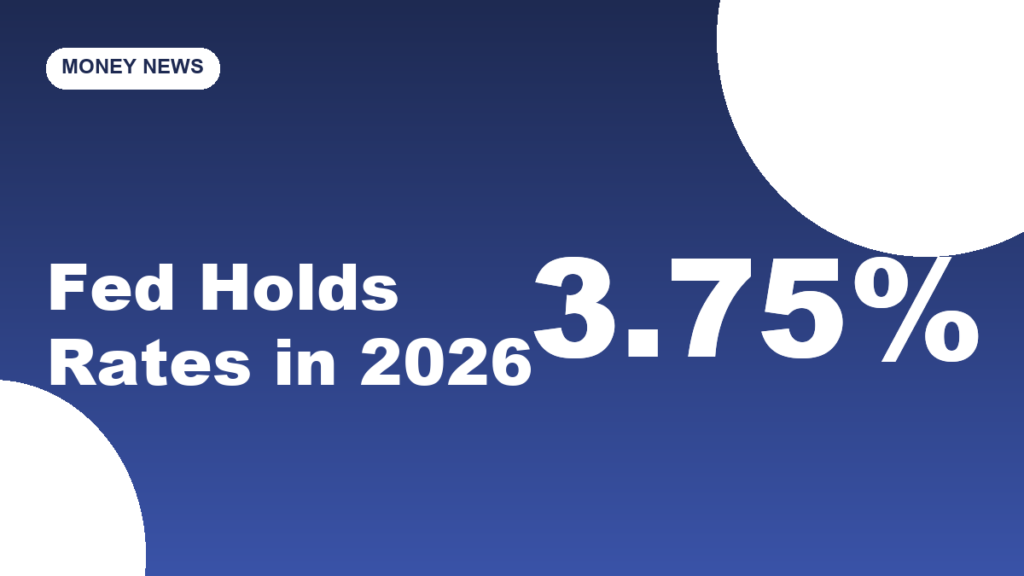
If you were hoping for cheaper loans this summer, the Federal Reserve just dashed those plans again. At its meeting on June 17, 2026, the Fed left its benchmark interest rate unchanged at a target range of 3.50% to 3.75% — the fourth meeting in a row with no cut. Behind that decision is a stubborn problem: core PCE inflation, the Fed’s preferred gauge, is still running around 3.3%, well above its 2% goal. A few officials have even floated the idea that the next move could be a rate hike rather than a cut. Here is what that means for your savings, your debt, and the choices you can make before the Fed meets again on July 28-29.
What “holding rates” actually does
The federal funds rate is the interest banks charge each other for overnight loans, and it ripples outward into almost every rate you touch. When the Fed holds, it is essentially keeping borrowing costs parked where they are. That is good news if you are a saver and frustrating news if you are carrying debt. Importantly, a hold does not mean rates are about to fall — and the chatter about possible hikes is a reminder that they could even drift higher. Treating “rates will drop soon” as a given is how people end up making bad timing bets.
Savers: this is your window
High-yield savings accounts (HYSAs), money market accounts, and certificates of deposit move closely with the Fed’s rate. With the target still in the mid-3% range, the best online HYSAs and short-term CDs are still paying competitive yields — often far more than the near-zero rates at big traditional banks. If your emergency fund is sitting in a checking account or a legacy savings account earning a fraction of a percent, you are leaving real money on the table.
A few practical moves: compare current HYSA rates from a couple of reputable banks before parking cash, and check that the account is FDIC-insured. If you have money you won’t need for six months to a year, a CD can lock in today’s yield in case rates do eventually fall. And don’t chase a teaser rate without reading the fine print on minimum balances and fees.
Borrowers: don’t wait for a rescue
Mortgage rates have hovered in the rough vicinity of 6% — they track the 10-year Treasury more than the Fed directly, but the Fed’s stance shapes the overall climate. If you’ve been sitting on the sidelines waiting for rates to tumble back to pandemic-era lows, this hold is a signal not to hold your breath. Buy a home when the numbers work for your budget, not on a guess about where rates head next. If rates do fall later, refinancing is always an option.
Credit cards are where a prolonged hold stings the most. Card APRs are tied to the prime rate, which moves with the Fed, so balances are still expensive to carry — often north of 20%. Understanding what the Fed’s latest rate decision means for your money can help you prioritize: with no cut on the horizon, aggressively paying down high-interest card debt is one of the highest-guaranteed-return moves available to you right now. A 0% balance-transfer offer, if you qualify, can also buy breathing room.
Smart moves before the July 28-29 meeting
You don’t need to predict the Fed to act sensibly. A few steps that hold up no matter what happens next month:
- Audit where your cash lives. Move idle savings into an insured HYSA or CD so it earns the going rate instead of nothing.
- Attack variable-rate debt first. Credit cards and other variable loans are the most exposed if the Fed leans toward a hike.
- Lock rates you like. If a CD yield or a mortgage rate works for your plan today, don’t gamble on a better one appearing.
- Keep an emergency cushion. Three to six months of expenses in liquid savings matters more than squeezing out an extra fraction of a percent of yield.
- Tune out the noise. One meeting rarely changes a sound long-term plan. Base decisions on your timeline, not headlines.
The bottom line
The Fed’s fourth straight hold tells you the era of falling rates many people expected has not arrived, and with inflation near 3.3% and some officials eyeing hikes, it may not arrive on the schedule you’d like. That is genuinely a tailwind for savers and a reason for borrowers to stop waiting and start chipping away at expensive debt. The next decision comes July 28-29, but the smartest plan doesn’t hinge on it. For the latest rate details and a refresher on how these decisions filter down to your accounts, always confirm the official numbers at federalreserve.gov — and for plain-English breakdowns of moves like these, WalletWisp is a solid place to start.