HME Drive Thru in Saudi Arabia: 2026 Speed Guide
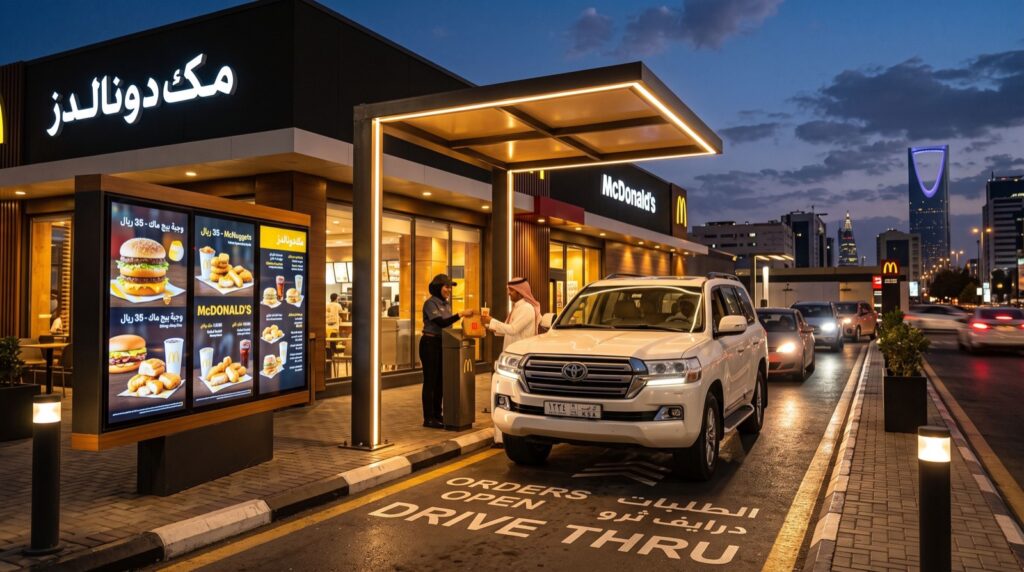
The drive-thru lane is where quick-service brands win or lose the loyalty of hurried customers. An HME drive thru in Saudi Arabia gives operators the headset audio, timing sensors, and reporting they need to turn a busy lane into a smooth, measurable operation. In 2026, as delivery and off-premise dining keep growing across the Kingdom, lane performance has become a core business metric rather than a nice-to-have.
This guide explains how modern drive-thru communication systems work, what separates a good lane from a slow one, and how the same efficiency thinking now stretches from Riyadh to markets like Pakistan. The focus throughout is practical: fewer errors, faster cars, happier crews.
What an HME Drive Thru System Actually Does
At its heart, an HME drive thru system is a communication and timing platform. Crew members wear wireless headsets that connect them clearly to the order point, even during peak noise. Vehicle sensors detect when a car arrives and departs, feeding precise timing data into a dashboard.
That combination matters because clarity and speed are linked. When staff hear the order correctly the first time, accuracy improves, remakes drop, and the lane keeps moving. A professional HME drive thru in saudi arabia deployment ties all of this into one coherent system rather than a patchwork of radios and guesswork.
The building blocks of a fast lane
- Wireless headsets with noise reduction for clear order-taking.
- Vehicle detection loops that mark arrival and departure precisely.
- Timer displays that show crews their live speed-of-service.
- Reporting software that benchmarks lanes, shifts, and locations.
Why Speed of Service Is a Business Metric
Every extra second in the lane compounds across hundreds of cars a day. Slow lanes cause drive-offs, where a customer simply leaves before ordering, and each drive-off is lost revenue plus a soured impression. Timing data lets managers pinpoint exactly where the delay lives, whether at the menu board, the window, or the kitchen handoff.
The U.S. Bureau of Labor Statistics notes that the food-service sector is one of the largest and most competitive employers, which underscores how thin operating margins can be. You can review broader industry context at the Bureau of Labor Statistics food services overview. In that environment, shaving seconds off a lane directly protects profitability.
How does an HME system improve order accuracy?
It improves accuracy mainly through audio clarity and structured communication. Noise-cancelling headsets let staff hear the customer over engine and traffic noise, so orders are captured correctly the first time. Fewer mishears mean fewer remakes, which speeds up the whole lane and cuts food waste.
Comparing Drive-Thru Setups: Spec Table
Not every location needs the same configuration. The table compares three tiers commonly deployed across the Gulf and South Asia in 2026.
| Capability | Entry Lane | Standard HME Lane | Multi-Lane Enterprise |
|---|---|---|---|
| Headset audio | Basic | Noise-cancelling | Noise-cancelling + zones |
| Vehicle timing | Manual | Automatic | Automatic + predictive |
| Live speed display | No | Yes | Yes, per lane |
| Cross-site reporting | No | Single site | Full network |
| Best fit | Small cafe | Single restaurant | Chains, dual lanes |
From Riyadh to Lahore: A Shared Efficiency Playbook
The drive-thru boom is not limited to the Gulf. Quick-service and pharmacy brands across South Asia are adopting the same timing-and-audio discipline. A dedicated Drive Thru Solution in pakistan shows how operators in fast-growing urban markets apply identical metrics to guide lane design and staffing.
The playbook travels well because the fundamentals are universal: measure the wait, communicate clearly, and coach the crew on real numbers. Whether the lane is in Riyadh or Lahore, the operator who tracks speed-of-service consistently will outperform the one who runs on gut feel.
A field-tested tip
Post the live timer where the crew can see it during rushes. In several deployments, simply making speed-of-service visible in real time nudged teams to self-correct without any manager intervention. Pairing that visibility with quality service providers who tune the hardware correctly makes the improvement stick.
The Kitchen Connection: Speed Starts Behind the Window
Many operators obsess over the lane and forget that a slow window often has a kitchen cause. When order accuracy is high and timing is visible, the pressure shifts to production, and that is exactly where the data helps. A live timer tells the kitchen when a car is about to reach the window, so food is ready rather than started at the last second.
Synchronizing the front and back of house is what separates a genuinely fast lane from one that merely looks organized. Crews that see the countdown pace themselves, prep during lulls, and hand off cleanly during rushes. In 2026, the best-performing sites treat the drive-thru as a single connected system from menu board to bag hand-off, not a series of disconnected steps.
Rolling Out Without Disruption
A drive-thru upgrade should not shut down your busiest revenue channel. Sensible operators schedule installation during off-peak hours and train crews on the headsets before go-live.
- Audit the current lane for timing baselines.
- Install audio and sensors during a slow window.
- Train the crew on headset etiquette and timer targets.
- Review the first two weeks of data and fine-tune.
Frequently Asked Questions
How long do drive-thru headset batteries last per shift?
Quality systems are designed to run a full shift on a charge, with spare batteries rotating on a charging base. Crews swap packs during breaks so the lane never loses audio coverage during a rush.
Can an HME system handle a dual-lane drive-thru?
Yes. Enterprise configurations support multiple lanes with zoned audio and per-lane timing, so a single site can measure and optimize each lane independently while reporting rolls up to head office.
Does the timing data integrate with our POS?
In most cases the reporting platform can align lane timing with order data, giving a fuller picture of throughput. Confirm integration details with your vendor, since exact compatibility depends on your point-of-sale software.
Is a drive-thru system worth it for a single location?
For any lane with steady traffic, yes. Even one restaurant gains from clearer orders, fewer remakes, and visible speed targets, and the reduction in drive-offs typically justifies the investment.
Conclusion
An HME drive thru in Saudi Arabia is really an investment in clarity, speed, and measurable service, and the same principles now power lanes far beyond the Kingdom. Start by baselining your timing, upgrade audio and sensors thoughtfully, and coach your crew with live data. In 2026, the brands that respect their customers’ time at the window are the ones that keep them coming back. Ready to speed up your lane? Talk to a drive-thru specialist and get your baseline audit scheduled.