Online Tutoring in 2026: How It Works and Why It Delivers
Online tutoring has quietly become one of the most effective ways students learn in 2026. What began as an emergency measure now outperforms many traditional setups, thanks to better tools, smarter methods, and teachers who have mastered the virtual classroom. This guide explains exactly how online tutoring works, the benefits it brings, and how to get real results from every session.
For families in Islamabad and across Pakistan, the shift is practical. No traffic, no fixed academy timetable, and access to specialist teachers who may live in another city entirely. Understanding the mechanics helps you use the model to its full potential.
How Online Tutoring Actually Works
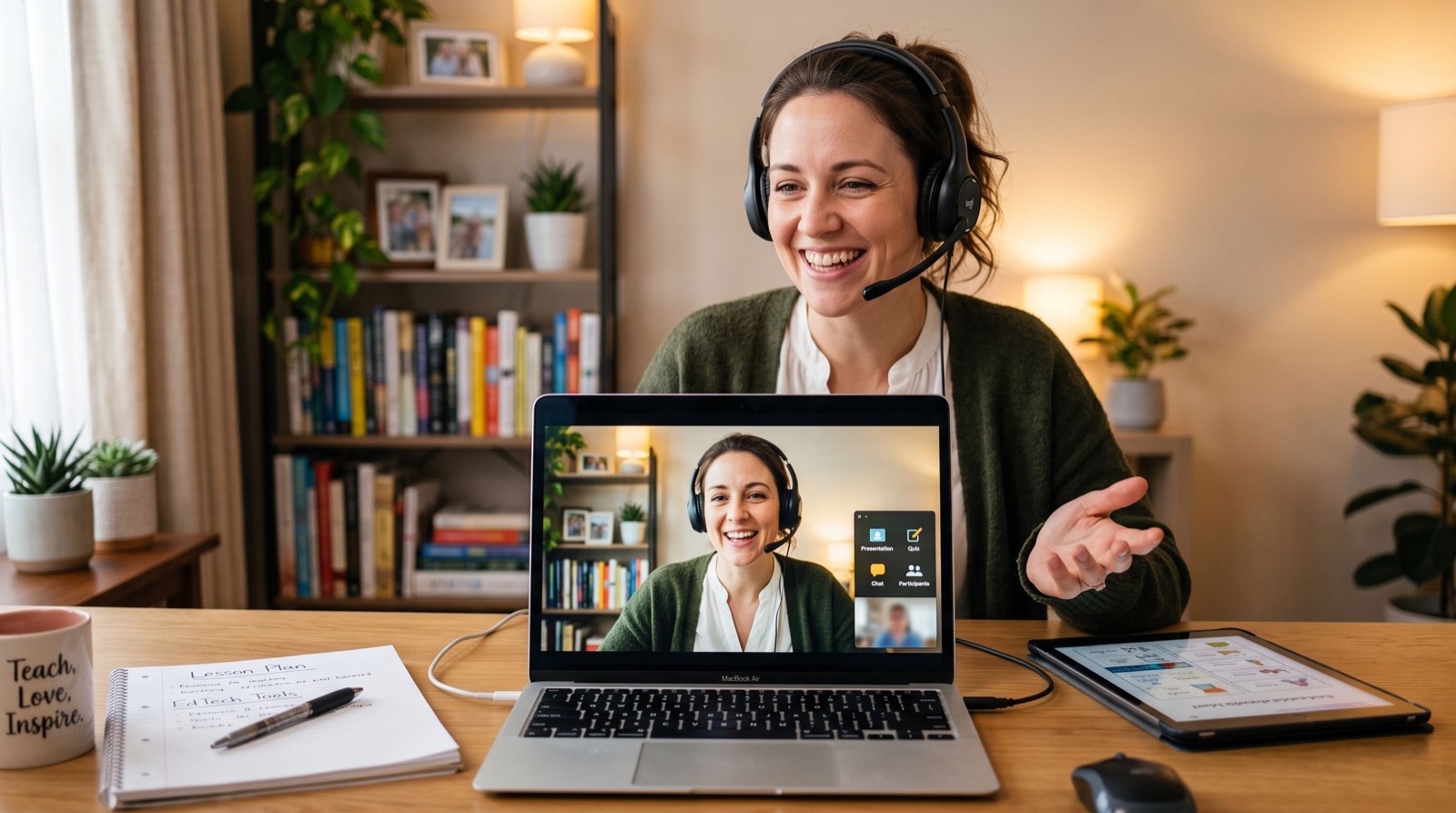
A modern virtual lesson is far richer than a video call. Tutors use interactive whiteboards, screen sharing, and shared documents so a student can work through a problem while the teacher watches and guides in real time. Sessions are often recorded, giving learners a personal library to revisit before exams.
The best setups feel collaborative rather than one-directional. A tutor might annotate a physics diagram, drop a quiz link mid-lesson, and share a marked past paper, all within one hour. This blend of tools keeps students active instead of passively watching. Quality online tutoring platforms make these features seamless so lessons flow without technical friction.
What makes a virtual session effective?
Interaction is the deciding factor. A tutor who talks for an hour achieves little, while one who asks questions, sets short tasks, and checks understanding constantly drives real learning. The screen actually helps here, because tools like instant polls and shared editing keep the student engaged.
Feedback speed is the second factor. Online tutors can correct a mistake the moment it appears on the shared screen, preventing bad habits from setting in. That immediacy is hard to match in a crowded physical classroom.
Accountability is the third, often overlooked factor. Because sessions are booked individually and recorded, both student and parent can see exactly what was covered and whether homework was completed. This visibility keeps everyone honest and makes it easy to spot when a topic needs a second pass before moving on.
Online Tutoring Versus Traditional Coaching
Both models have strengths, and the right choice depends on the learner. The comparison below lays out the key differences so you can decide with confidence.
| Factor | Online Tutoring | Traditional Coaching |
|---|---|---|
| Attention | Often one-on-one | Usually group-based |
| Flexibility | High, book any slot | Fixed timetable |
| Revision | Recorded sessions | Live only |
| Travel | None | Daily commute |
| Teacher choice | Nationwide pool | Local only |
Traditional coaching still suits students who thrive on peer energy and need the structure of leaving home. Online tutoring wins on personalisation, flexibility, and revision value. Many families combine both for balance.
Cost is another practical difference. Group coaching spreads a teacher’s time across many students, which lowers the per-head price but also the individual attention. Online one-on-one tutoring costs more per hour, yet often delivers faster gains because every minute targets the student’s specific weak spots. For exam candidates on a deadline, that focused efficiency frequently justifies the higher rate.
Is online tutoring suitable for younger children?
It can be, with the right approach. Younger learners need shorter sessions, more visual activities, and a parent nearby for the first few classes. Once a routine forms, many primary students adapt happily and enjoy the interactive tools.
The Real Benefits Students Notice
Beyond convenience, online tutoring delivers measurable advantages that show up in confidence and grades. These are the benefits families report most often.
- Personal pace: lessons adjust to the student, not a fixed class speed.
- Recorded revision: learners rewatch tricky explanations before exams.
- Wider expertise: access specialist tutors regardless of location.
- Safer and greener: no evening commute across busy roads.
Structured online learning courses extend these benefits by giving students a clear syllabus to follow between live sessions. This keeps momentum going on days without a scheduled class and reinforces what the tutor covered.
How do you measure whether it is working?
Track two things: confidence and marks. Ask your child to rate their comfort with each topic weekly, and review test scores against a starting baseline. A good tutor will supply short progress notes that make this easy to follow.
Getting the Most From Online Tutoring
The technology only helps if you use it well. A few simple habits turn ordinary sessions into genuine progress.
- Send the tutor confusing questions before each lesson.
- Keep a dedicated, quiet space with good lighting and audio.
- Rewatch the recording within 24 hours to lock in learning.
- Set one clear, measurable goal for every week.
Here is a practical tip that pays off quickly: ask the tutor to spend the final five minutes having the student summarise the lesson aloud. This active recall reveals gaps instantly and cements the concept far better than passive review. When choosing among reputable service experts, favour those who build this kind of check into every session.
The evidence is encouraging. Analysis from the OECD shows that personalised, feedback-rich instruction consistently raises outcomes, while UNESCO reports that well-designed digital learning can widen access without sacrificing quality when teaching stays interactive.
Frequently Asked Questions
Is online tutoring as good as face-to-face teaching?
For most students it matches or exceeds in-person tutoring, especially for one-on-one sessions. The keys are an interactive teaching style, prompt feedback, and consistent attendance. Recorded lessons add revision value that traditional classes cannot offer.
What subjects work best with online tutoring?
Mathematics, sciences, English, and test preparation all suit virtual lessons thanks to digital whiteboards and screen sharing. Hands-on lab work is the main exception and often needs some in-person support.
How much does online tutoring cost?
Costs vary by level, subject, and tutor experience. Group sessions and self-paced courses are the most affordable, while private one-on-one lessons cost more. Always confirm whether notes and progress reports are included.
What technology do students need to start?
A stable internet connection, a laptop or tablet, and a basic headset are enough. For maths and science, a phone stand or document camera pointed at a notebook lets the tutor see handwritten working clearly.
Final Thoughts
Online tutoring in 2026 offers a flexible, personalised, and genuinely effective path to better grades when you pair the right tutor with good study habits. Focus on interactive lessons, quick feedback, and clear weekly goals, and use recordings to reinforce every concept. The model removes old barriers of distance and time while keeping learning firmly student-centred. Ready to see the difference? Book a trial online tutoring session today and give your child the individual attention they deserve.