Frozen Storage in Riyadh: The 2026 Cold Chain Playbook
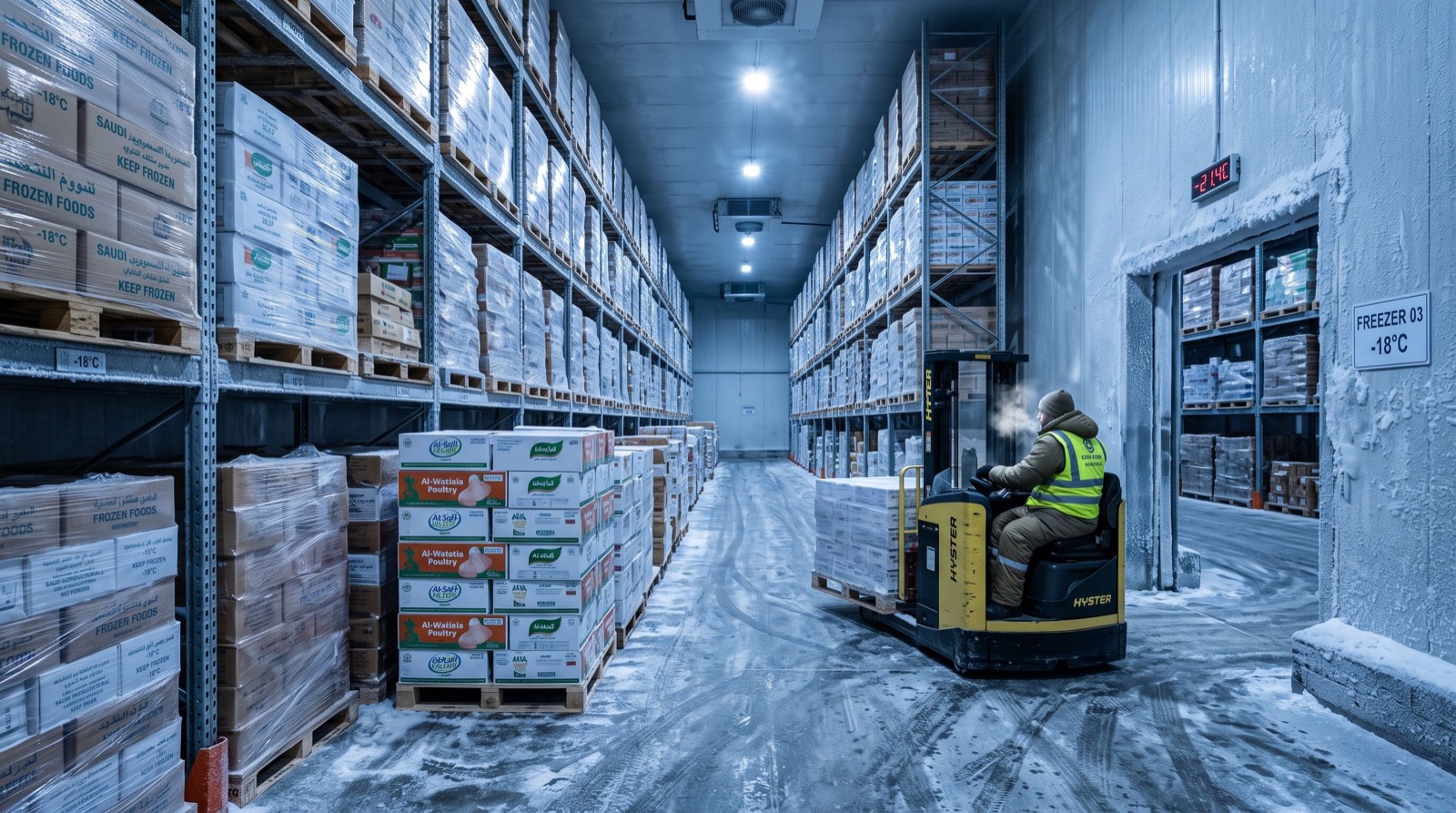
In a city where summer heat routinely tops 45 degrees, reliable Frozen Storage in Riyadh is not a luxury; it is the backbone of every food, pharma, and catering business that sells perishable goods. One temperature excursion can ruin a container of product and a hard-won reputation. This 2026 playbook explains how modern frozen warehousing protects your stock, your customers, and your margins.
Drawing on hands-on cold chain experience, we cover the standards that matter, the warning signs of a weak facility, and the practical habits that keep frozen goods safe from factory to fork.
Why Does Frozen Storage in Riyadh Demand Precision?
Frozen does not simply mean “cold.” Most frozen foods must stay at or below minus 18 degrees Celsius, and even brief warming lets ice crystals form, damaging texture and safety. In Riyadh’s climate, the gap between a compliant warehouse and a failing one is measured in minutes of door-open time and backup-power readiness.
Pharmaceuticals and vaccines raise the stakes further, with narrow temperature bands and mandatory data logging. The right facility treats temperature as a continuously monitored, auditable metric, not an afterthought.
The Core Elements of a Reliable Frozen Facility
Redundant refrigeration and power
Compressors fail and grids flicker. Serious operators run backup compressors and standby generators so the temperature never drifts, even during an outage.
Continuous monitoring and alarms
Sensors should log temperature around the clock and alert staff the moment a zone moves out of range. Ask to see the data trail; a credible provider shares it willingly.
Disciplined dock management
Most temperature loss happens at the loading dock. Air curtains, fast doors, and tight scheduling keep warm air out and cold air in.
- Insulated, sealed dock doors.
- Staged loading to minimize door-open time.
- Temperature checks logged at every handover.
Frozen, Chilled, or Ambient: Choosing the Right Zone
Mixed inventories need mapped storage. Overcooling ambient goods wastes energy, while under-cooling perishables risks spoilage. This table keeps the decision simple.
| Zone | Temperature Range | Typical Products |
|---|---|---|
| Frozen | Minus 18 C and below | Meat, seafood, ice cream |
| Chilled | 0 to 5 C | Dairy, fresh produce |
| Ambient | Room temperature | Canned and packaged goods |
Businesses with shelf-stable lines alongside perishables often pair frozen space with dedicated Ambient Storage In Riyadh, keeping the whole catalogue with one accountable provider and one set of records.
How to Vet a Frozen Storage Partner
- Request temperature logs from the last 90 days.
- Confirm backup power with a tested generator and SLA.
- Check certifications for food safety and hygiene.
- Inspect the docks for air curtains and fast doors.
- Trial a shipment and verify the cold chain end to end.
Choosing reputable service experts with a proven monitoring record is the single best protection against costly spoilage losses.
A Practical Cold Chain Tip
Here is a field-tested insight: run a quarterly “mock recall” drill. Pick a random lot and trace it, with timestamps and temperatures, from inbound to outbound in under two hours. Facilities that pass this test have genuine traceability; those that stumble reveal gaps before a real incident exposes them. It is the fastest way we know to separate marketing claims from operational reality.
For frozen food specifically, maintaining minus 18 degrees Celsius is the internationally recognized benchmark. Guidance from the World Health Organization on safe food handling and temperature control underpins the standards any credible Riyadh operator should meet.
Costly Mistakes to Avoid in 2026
- Accepting a facility with no backup generator.
- Skipping documented temperature logs.
- Overloading freezers so air cannot circulate.
- Ignoring dock-door discipline during loading.
Each shortcut invites a temperature excursion, and in frozen logistics an excursion often means total product loss rather than a small markdown.
Protecting the Cold Chain Beyond the Warehouse
Frozen storage is only one link in a longer chain. A product that sat perfectly at minus 18 degrees can still spoil during a careless transfer to a delivery van. The strongest operators manage the whole journey, not just the freezer.
Start with pre-cooled vehicles. A refrigerated truck should already be at temperature before loading begins, never cooling down with the product inside. Insist that your logistics partner records the truck’s starting temperature at every pickup.
Next, minimize handling touchpoints. Every transfer between freezer, dock, and vehicle is a chance for warming. Facilities with direct, temperature-controlled loading bays remove that risk by keeping goods in cold air from shelf to truck.
Finally, use data loggers that travel with the shipment. A small device recording temperature end to end gives you proof of compliance and an early warning if something slips. For high-value pharma loads, this record is often a regulatory requirement rather than a nice-to-have.
Energy efficiency and sustainability
Running freezers in Riyadh’s heat is energy intensive, so efficiency matters to both cost and carbon. Look for facilities using high-density insulation, LED lighting, and modern compressors with heat recovery. These upgrades cut running costs, and increasingly customers and regulators reward operators who can prove a lower-energy cold chain in 2026.
Frequently Asked Questions
What temperature should frozen storage in Riyadh maintain?
Frozen goods should stay at or below minus 18 degrees Celsius. Continuous monitoring and alarms ensure the temperature never drifts, even during loading or a power interruption.
How do Riyadh warehouses cope with extreme summer heat?
Reliable facilities use redundant refrigeration, standby generators, heavy insulation, and strict dock discipline so external heat never reaches the stored product.
Can I store frozen and ambient goods with one provider?
Yes. Many Riyadh operators run frozen, chilled, and ambient zones, letting you manage a mixed catalogue under a single contract with unified temperature records.
How can I be sure a facility keeps the cold chain intact?
Ask for 90 days of temperature logs, confirm tested backup power, and run a trial shipment. A quarterly mock-recall drill also proves real traceability.
Conclusion
Dependable frozen storage in Riyadh rests on three pillars: redundant cooling, relentless monitoring, and disciplined dock management. Vet any provider against the checklist above, insist on data you can audit, and test the cold chain before you trust it with stock. Build those habits in 2026 and you will protect both your perishable inventory and the reputation that depends on it.